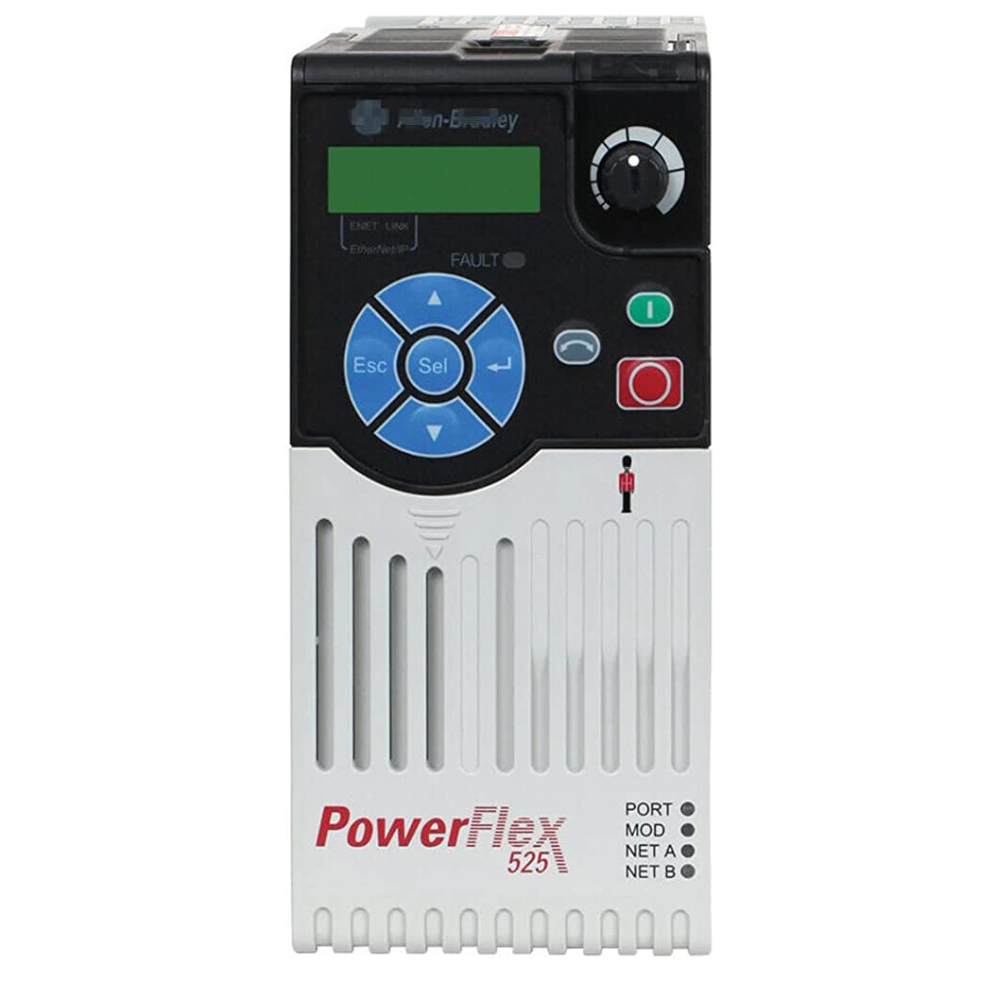
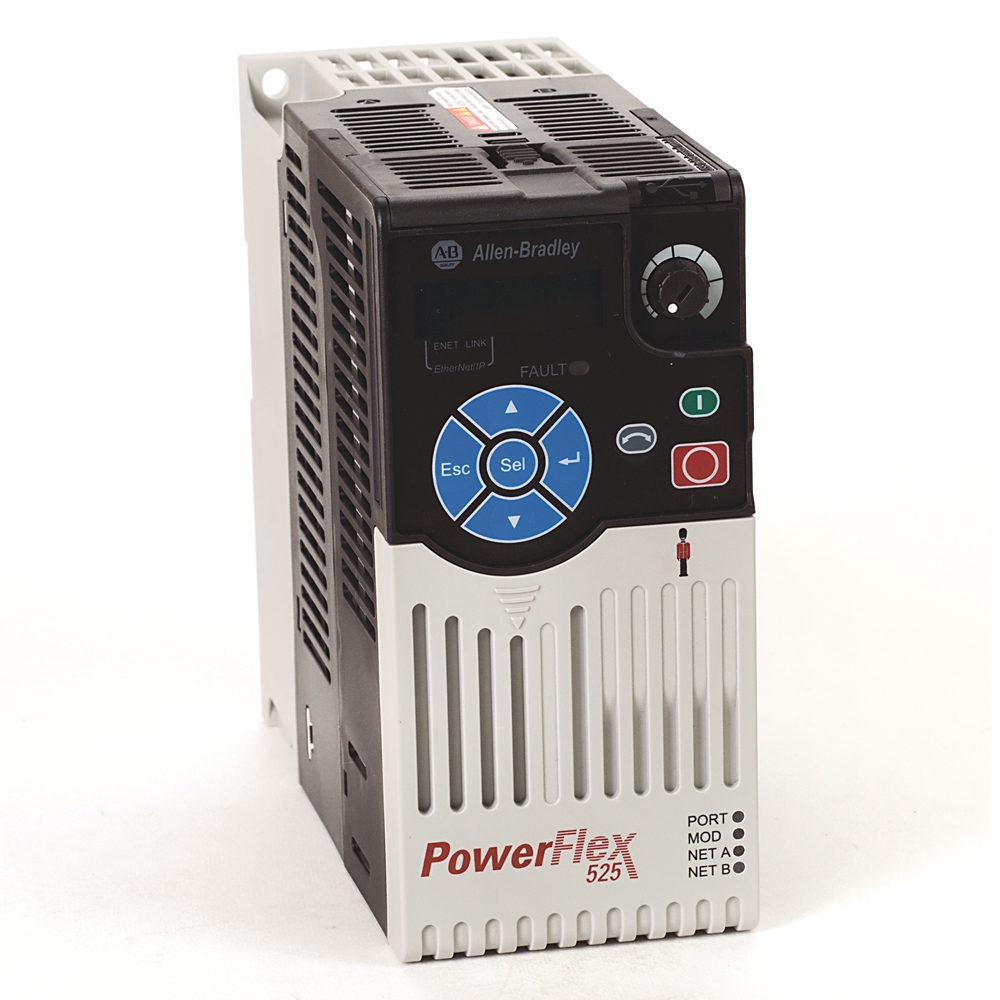
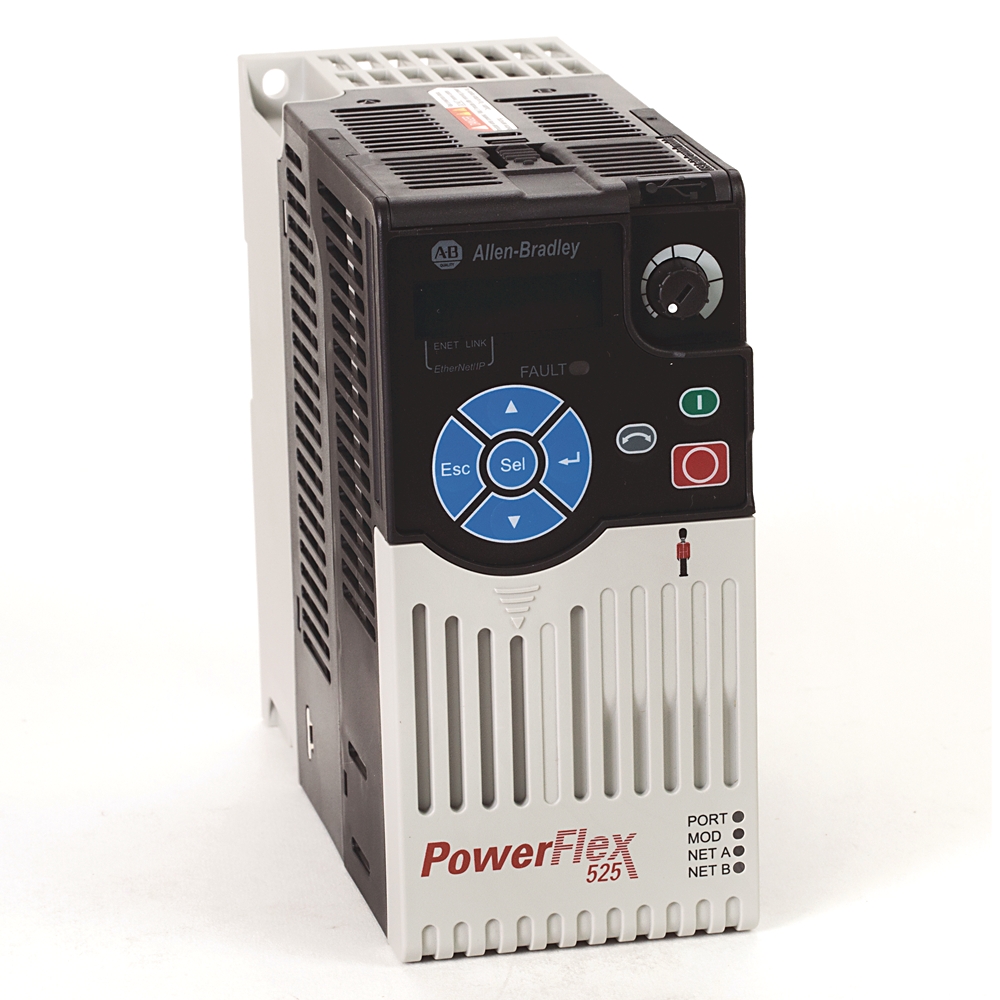
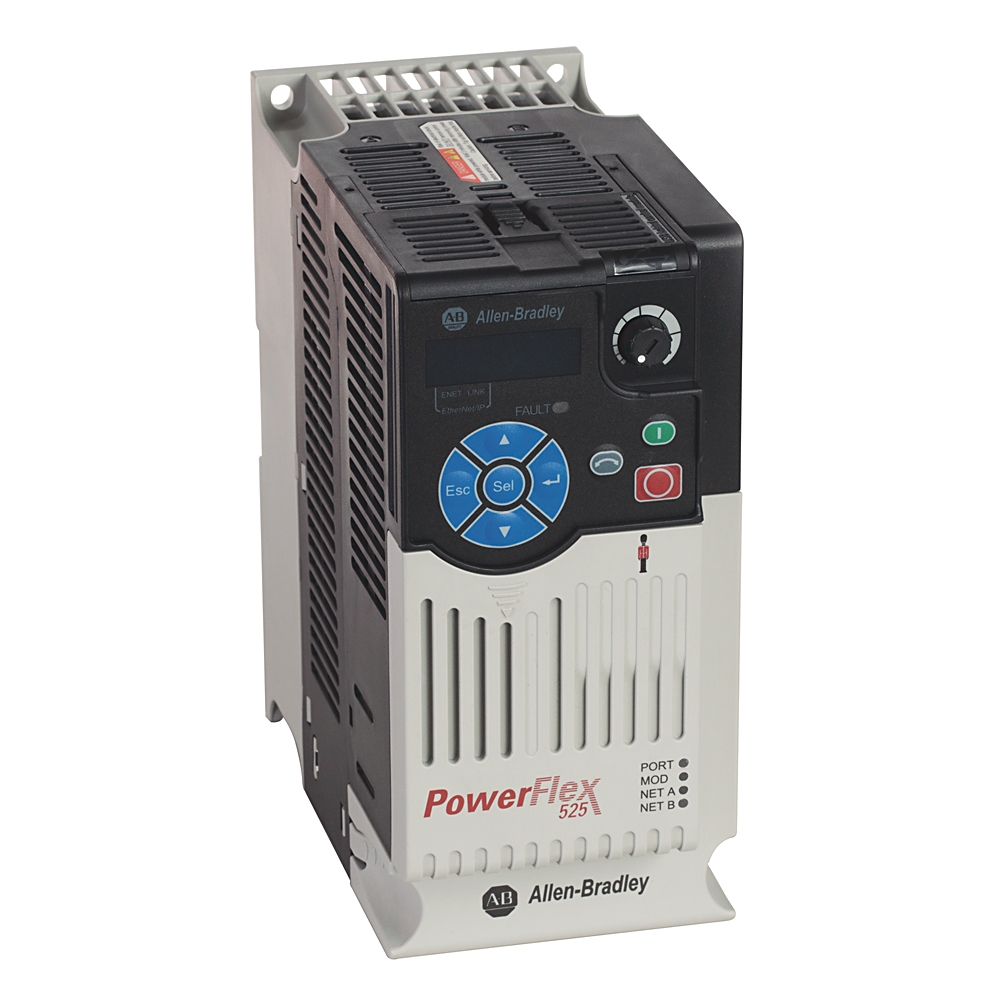
25B-D4P0N104 PowerFlex 525 1.5kW (2Hp) AC Drive About
The
Allen-Bradley 25B-D4P0N104 is a
PowerFlex 525 Adjustable Frequency AC Drive manufactured by
Rockwell Automation. This specific Variable Frequency Drive (VFD) is a
3-phase, 480V AC unit rated for an output current of
4.0 Amps and a power output of
1.5 kW (2 HP). [
1,
2,
3,
4,
5]
Technical Specifications
- Input Voltage Range: 380480V AC
- Input Phases: 3-Phase
- Output Current: 4.0 Amps
- Output Power: 1.5 kW (2 HP) for both Normal and Heavy Duty
- Frame Size: Frame A
- Enclosure Rating: IP20 NEMA / Open Type
- Embedded Control: Built-in EtherNet/IP port, Safe Torque-Off (STO), and RS485 communication
- Filtering: No EMC Filter included
- Braking: Integral Brake IGBT transistor included
- Operating Temperature: -20C to 50C [1, 2, 3, 4, 5]
Part Number Breakdown
- 25B: PowerFlex 525 Series
- D: 480V AC Input Voltage Class
- 4P0: 4.0 Amps Output Current rating
- N: Open Enclosure (IP20 NEMA Type Open)
- 1: Standard Control Module Layout
- 0: No EMC Filter
- 4: Standard Braking Architecture [1, 2, 3, 4]
Versatile Control and ConnectivityThe PowerFlex 525 offers both V/Hz and sensorless vector control for a wide range of motors. It features connectivity ports including EtherNet/IP, RS-485, and USB, ensuring seamless integration with industrial networks and controllers. Programming can be done using the integrated keypad or the intuitive Connected Components Workbench (CCW) software, making it adaptable for various setups.
Robust Protection and Safety FeaturesSafety and reliability are central to the 25B-D4P0N104 AC Drive. With built-in overload, short circuit, and ground fault protection, as well as electronic thermal and overheating safeguards, the drive protects both itself and connected motors. Features like Safe Torque Off and regenerative braking (external unit required) further enhance operational safety in demanding environments.
Efficient and Flexible DesignThis drive is engineered for efficiency, boasting up to 97% performance and optimized for low power loss. Its compact, lightweight frame (1.6 kg) and panel-mount design fit easily into space-constrained control cabinets. Rated for operation up to 1000 m altitude without derating and tolerating a wide temperature range, it thrives in diverse industrial settings.
FAQ's of 25B-D4P0N104 PowerFlex 525 1.5kW (2Hp) AC Drive:
Q: How is the 25B-D4P0N104 PowerFlex 525 AC Drive programmed?
A: The drive can be programmed using either the integrated keypad or through Connected Components Workbench (CCW) software via USB. This simplifies setup and parameter adjustment, making configuration accessible even for users with minimal programming experience.
Q: What type of motor control methods does this AC drive support?
A: It supports V/Hz and Sensorless Vector Control (SVC) modes, as well as closed loop operation. This ensures compatibility with a variety of AC motors and offers precise speed and torque control for diverse industrial applications.
Q: When is regenerative braking applicable for this drive, and is additional hardware required?
A: Regenerative braking is supported for this model, but you must install an external braking unit to utilize this feature. It is recommended when rapid stopping or energy feedback to the supply is crucial in your application.
Q: Where can the PowerFlex 525 drive be installed, considering environmental requirements?
A: The drive is designed for panel mounting in control cabinets. Its operational temperature range (-20C to +50C), IP20 rating, and suitability for up to 1000 meters altitude without derating make it ideal for most indoor industrial environments.
Q: What are the main benefits of using the 25B-D4P0N104 in industrial automation?
A: Benefits include high energy efficiency (up to 97%), robust electronic protections, flexible integration via advanced communication ports, and simplified programming. Its reliable performance enhances machine productivity and minimizes downtime.
Q: How does the drive handle overcurrent and overheating situations?
A: The drive incorporates overload, short circuit, ground fault protection, and electronic thermal protection. These safety mechanisms help prevent damage to the drive and connected equipment, extending operational life.
Q: What is the process for connecting the drive to a network or PLC?
A: Connection is straightforward using built-in EtherNet/IP or RS-485 ports. Screw-type terminal blocks provide secure electrical connections, while standard protocols ensure seamless communication with PLCs and other control network devices.






 Send Inquiry


 Send Inquiry
 Send Inquiry
 Call Me Free


 English
 Spanish
 French
 German
 Italian
 Chinese (Simplified)
 Japanese
 Korean
 Arabic
 Portuguese